
Wide-Span Outdoor Structures Built to Outlast the Rest
Fiberglass pergola installation in Gun Barrel City for patios and outdoor areas requiring long spans and custom color matching
Fiberglass as a structural material behaves differently from aluminum, steel, and vinyl in one measurable way that matters directly to pergola design: it maintains its dimensional stability across temperature swings without the expansion and contraction that metal frames experience, and without the moisture absorption that causes wood to twist and vinyl to require aluminum reinforcement for load transfer. The Chimney Guy installs fiberglass pergolas in Gun Barrel City as the high-performance option for outdoor structures where span width, custom color, and multi-decade durability are the deciding factors. The material's strength-to-weight ratio allows wider unsupported spans between columns than aluminum at equivalent member sizes, which means fewer posts interrupting the patio floor plan.
Installation sequencing for fiberglass pergolas begins with column footing placement, which is determined by the span specification—the wider the bay, the more the footing must resist moment force at the column base, and that calculation drives both footing depth and anchor hardware sizing. Unlike vinyl, fiberglass members do not require an internal aluminum insert to carry structural load because the fiberglass pultrusion itself is the structural element; the columns and beams carry load through their own cross-section. This is the difference that enables spans that would require a heavier aluminum or steel section to achieve without mid-span deflection.
Connect with The Chimney Guy to review your patio footprint, identify the column layout that opens up your floor plan, and discuss color matching options that tie the pergola to your home's existing exterior trim.
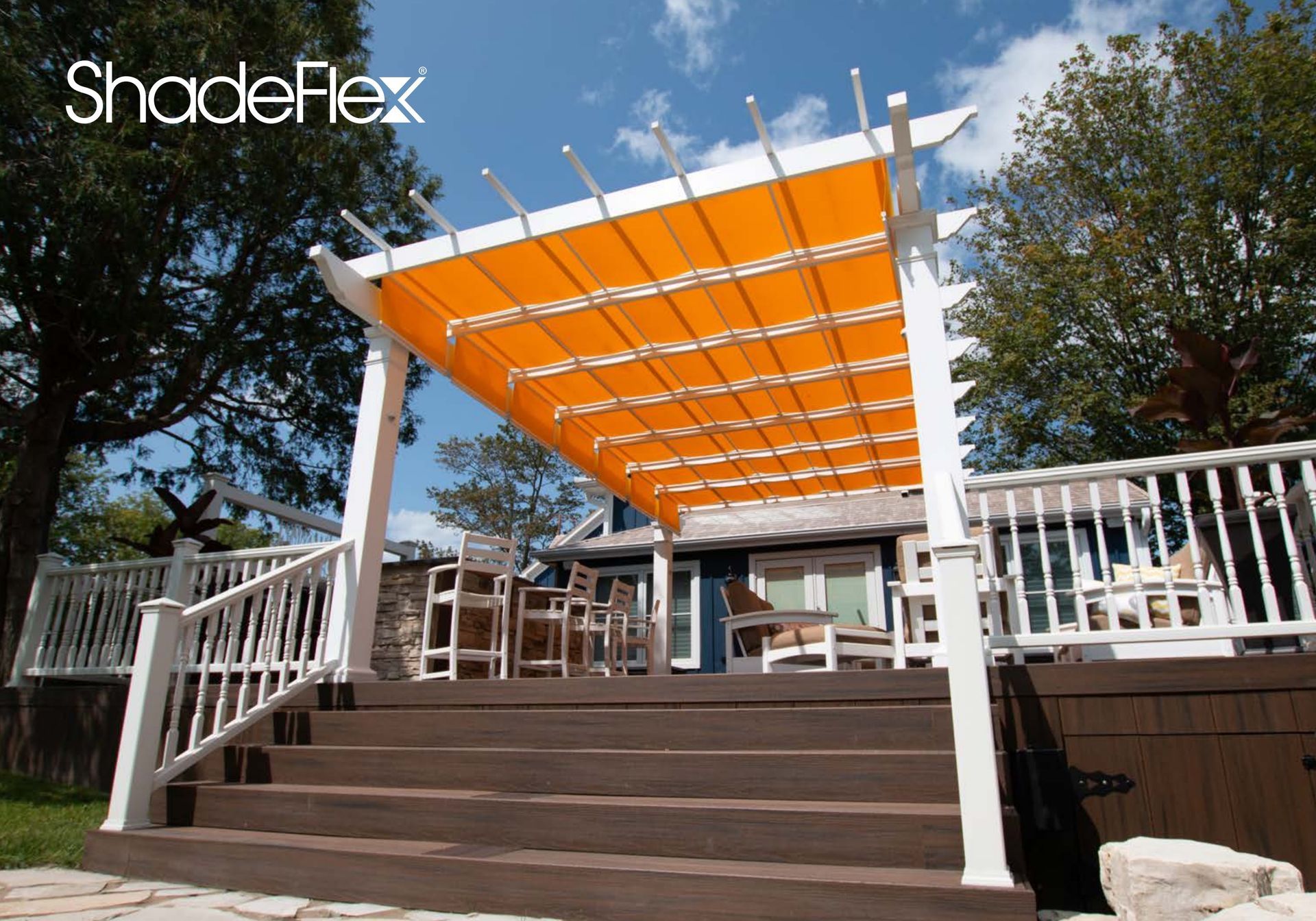
The Difference Between Fiberglass and Other Pergola Materials
The practical advantage of fiberglass over vinyl becomes visible at wider spans and in applications where a custom paint color is part of the design intent. Vinyl pergola profiles are manufactured in a fixed color that runs through the material, which means matching an exterior trim color involves choosing from available options rather than specifying a precise match. Fiberglass surfaces accept paint adhesion the same way wood does, so the pergola can be finished to an exact color chip match from the home's exterior palette—a detail that matters on properties where the yard structure is visible from the street and the owner wants the elevation to read as composed rather than assembled from unrelated components. The Chimney Guy uses this capability to deliver installations that integrate with the existing architecture rather than sitting adjacent to it visually.
After a fiberglass pergola is installed, what changes on the patio is the sense of openness under the structure—fewer columns at wider intervals means the seating area beneath is not interrupted by post bases, and furniture arrangement is driven by the owner's preference rather than the location of structural columns. The overhead member profile reads as architecturally substantial without the visual heaviness of timber, which is the balance that makes fiberglass appealing for larger patios where a narrow-profile aluminum structure would look undersized and a timber frame would require ongoing maintenance investment to stay presentable.
Storm-resistance is a structural characteristic of fiberglass that goes beyond marketing language: the material does not fatigue the way metal does under repeated cyclical loading from wind, and it does not develop the grain-level stress fractures that wood accumulates over years of moisture cycling. For a permanent outdoor structure designed to carry decades of use without remediation, fiberglass member integrity at year twenty looks substantially the same as at installation—no surface pitting, no joint movement from material expansion, and no paint adhesion failure at the beam-to-column connections.
What Property Owners Ask About Fiberglass Pergola Work
The questions below cover the material properties, installation decisions, and quality indicators that apply specifically to fiberglass pergola projects in Gun Barrel City.
Why can fiberglass achieve wider unsupported spans than vinyl at the same member size?
Fiberglass pultrusions carry load through their own cross-sectional geometry without requiring an internal reinforcement insert, whereas vinyl relies on aluminum inserts for structural capacity; the fiberglass member itself has sufficient stiffness to resist mid-span deflection at widths where vinyl would require a heavier insert to stay rigid.
How is fiberglass painted, and what preparation does the surface require before finishing?
Fiberglass accepts paint after light sanding and a bonding primer application, which creates the mechanical adhesion that holds topcoat without peeling; this is the same preparation sequence used on fiberglass doors and exterior trim, and when done correctly the finish is as durable as factory-applied color on metal components.
What makes fiberglass pergola construction appropriate for properties in Gun Barrel City with larger patios or open yard layouts?
Wider column spacing is the functional advantage—properties with expansive concrete decks or large flagstone patios can accommodate a fiberglass pergola that spans the full seating area without intermediate posts that interrupt foot traffic and furniture arrangement in ways that shorter-span structures require.
How does fiberglass behave differently from aluminum when temperatures shift significantly between seasons?
Aluminum expands and contracts measurably across temperature ranges, which over years can work fasteners loose at connection points and open small gaps at joints; fiberglass has a much lower coefficient of thermal expansion, so connection geometry at installation remains stable across seasonal temperature variation without requiring periodic hardware retightening.
What should you look for in the finished installation to confirm that fiberglass beams were seated correctly at the column connections?
The beam end should be fully seated in the column cap bracket with no visible gap, fasteners should be flush or countersunk rather than surface-proud, and the rafter-to-beam connections should show consistent spacing with no individual rafter tilting out of plumb—any of these conditions out of tolerance indicates a fitting issue that should be corrected before the structure is loaded with accessories or climbing plants.
The Chimney Guy is available to assess your outdoor space, discuss the span requirements and color specification for your project, and outline the footing and connection details appropriate for your patio layout and property.