
Structural Outdoor Shade With a Modern Profile
Metal pergola installation in Gun Barrel City for patios and outdoor living areas where wood structures require constant upkeep
What a finished metal pergola changes on a patio is apparent before anything else: the structure reads as permanent rather than provisional, with clean geometry that doesn't shift or swell with moisture and doesn't require a paint schedule to stay presentable. The Chimney Guy installs aluminum and steel pergolas in Gun Barrel City for homeowners who want an outdoor structure that functions architecturally rather than functionally alone. The appeal is specific—metal holds its dimensional tolerances across years of use in ways that wood cannot, and that precision is what gives a metal pergola its characteristic clean-line appearance rather than the weathered softness of a timber structure.
Installation involves setting post footings at depths appropriate for the soil bearing capacity and the pergola's height-to-width ratio, then assembling the frame in sections that allow the concealed water management channels to align correctly before final fastening. Those channels are built into the beam profiles—not applied externally—and they divert water that lands on the roof system away from the patio floor through downspout-style exits at the posts rather than dripping across the open structure. Adjustable louvered roof systems, where specified, use motorized or manual blade rotation to shift between full shade and open sky without requiring the owner to leave the seating area.
Schedule a site consultation with The Chimney Guy to review your patio dimensions, post placement options, and whether a louvered or fixed-roof configuration fits the way you use the space.
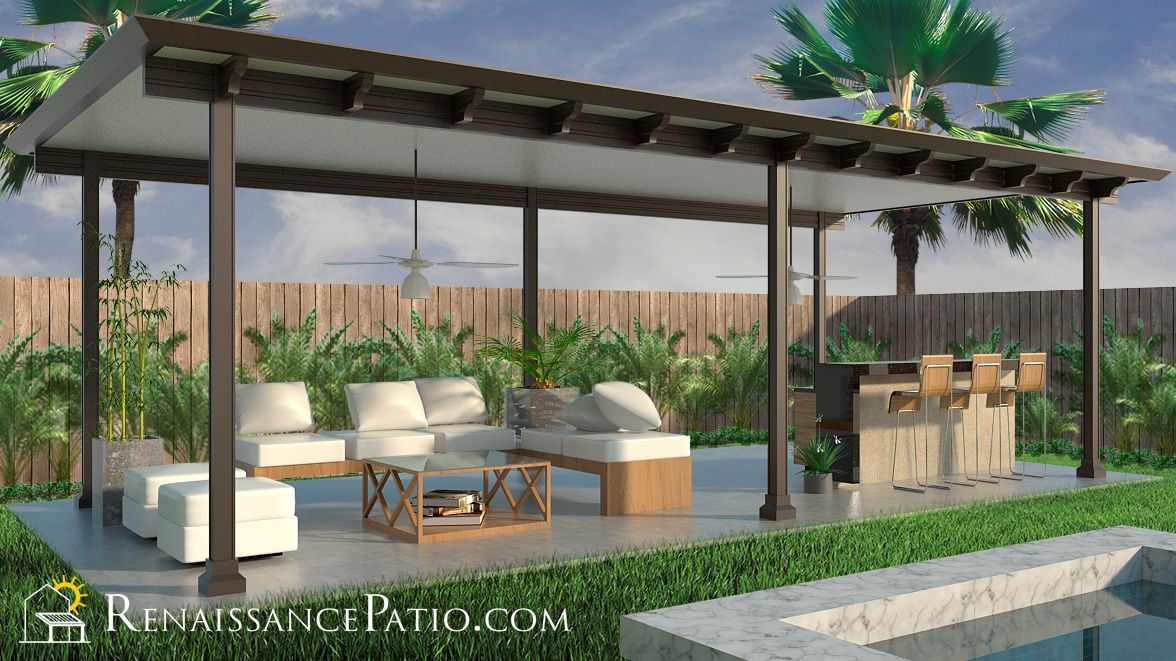
Why Metal Outperforms Wood Over the Life of the Structure
Wood pergola failures follow a predictable sequence: end grain absorbs moisture first, checks develop, then checking opens into cracking at the joints where two members connect, and that joint movement is what eventually pulls fasteners loose and destabilizes the structure. Aluminum and steel bypass this sequence entirely because neither material takes on moisture, which means the joint geometry at installation is the joint geometry five years later. The Chimney Guy specifies powder-coated aluminum frames for most residential installations because powder coating bonds to the metal substrate at a molecular level rather than sitting on the surface the way paint does, and it does not peel, chip, or require reapplication on a maintenance schedule.
After a metal pergola is installed, the patio area beneath reads as a defined architectural zone rather than open yard—furniture placement becomes deliberate, shade coverage is predictable based on roof blade position, and the structure contributes to the home's exterior elevation in a way that a freestanding umbrella or shade sail never achieves. The built-in drainage system is the detail most owners notice only after a rain event: water that would have dripped through an open-beam structure or sheeted off a solid roof instead exits at the base of the posts cleanly, leaving the patio floor dry.
Louvered blade systems introduce a decision point about motorization—manual blade adjustment is available and functional, but motorized systems allow the angle to be changed from a phone or wall switch, which is the practical choice for pergolas with more than three or four blade sections. The frame material choice between aluminum and steel affects weight, spanning capacity, and long-term surface maintenance, and that decision is made during the design phase based on the pergola's footprint and the architectural character of the main structure.
Answers About How Metal Pergola Work Gets Done
The questions below address installation decisions, material behavior, and the functional details that affect how a metal pergola performs over time for Gun Barrel City properties.
How are metal pergola posts anchored to prevent movement over time?
Posts are set into poured concrete footings with embedded anchor sleeves sized to the post base dimension; the footing depth is determined by the pergola's height and span, with taller and wider structures requiring deeper embedment to resist lateral forces at the post base.
What makes concealed water management channels different from a standard open-frame pergola?
Open-frame pergolas pass rain through the structure directly onto the patio surface; concealed channel systems built into the beam profiles collect water at the roof line and route it through the hollow post interior to a ground-level exit, which keeps the patio floor dry during rain events rather than requiring the owner to move indoors.
How does a louvered roof system work, and what angle settings are most useful?
Louvered blades rotate on a shared drive mechanism from fully closed—which sheds rain and blocks direct sun—to fully open, which allows full sky exposure; the most commonly used positions are partial angles between 30 and 60 degrees, which filter light without full shade or full opening.
Why is aluminum used more often than steel for residential pergola frames?
Aluminum is significantly lighter than steel, which reduces the load on footings and makes installation more manageable on finished patios; it also does not rust when the powder coat finish is damaged, whereas steel requires prompt touch-up of any surface breach to prevent oxidation from spreading beneath the coating.
What should you inspect on a finished metal pergola to confirm the installation was done correctly?
Blade alignment across the full roof span, consistent gap between blades in the closed position, water exit points at the post bases that are clear and unobstructed, and post plumb verified with a level are the primary quality indicators; misaligned blades that gap unevenly in the closed position indicate a drive mechanism that was not calibrated before the installation was signed off.
The Chimney Guy is prepared to assess your patio layout and outline the frame configuration, blade system options, and footing requirements that fit your specific outdoor space.