
Window Treatments That Actually Control Glare
Roller shades in Gun Barrel City for living rooms and covered patios where harsh sun glare makes spaces unusable
Unfiltered afternoon sun flooding through west-facing glass does more than create eye strain—it bleaches upholstery, overworks air conditioning systems, and makes rooms genuinely uncomfortable to occupy. The Chimney Guy installs interior and exterior roller shades in Gun Barrel City that address this directly, blocking solar heat before it penetrates glass rather than after. The distinction matters: an exterior shade intercepts radiant energy at the window's surface, while an interior shade intercepts it inside the room where it has already converted to heat.
The installation process begins with a window-by-window evaluation that accounts for orientation, existing frame conditions, and how each space is used throughout the day. Exterior roller shades mount above the window frame and roll down along guide tracks to hold position against wind, while interior shades mount inside or outside the window casing depending on depth and trim profile. Chain-drive systems offer manual control without batteries or wiring, while motorized rollers connect to remotes, home automation apps, or voice command systems for rooms where manual access is awkward—high transoms, skylights, or multi-window runs.
Arrange a room-by-room walkthrough with The Chimney Guy to identify which window orientations are driving your heat and glare problems and which shade configuration fits each one.
How Roller Shades Manage Heat and UV Exposure
Solar heat gain through untreated glass accounts for a measurable share of interior cooling load during afternoon hours, and roller shades rated for solar control are specified by openness factor—a percentage that determines how much light filters through versus how much is reflected. A 3% openness fabric blocks the majority of direct glare while preserving an outward view; a 1% fabric nearly eliminates both. Exterior installations reduce solar heat gain before it enters the glass assembly entirely, which is more effective than interior shading at the same openness factor because the heat never crosses the thermal envelope.
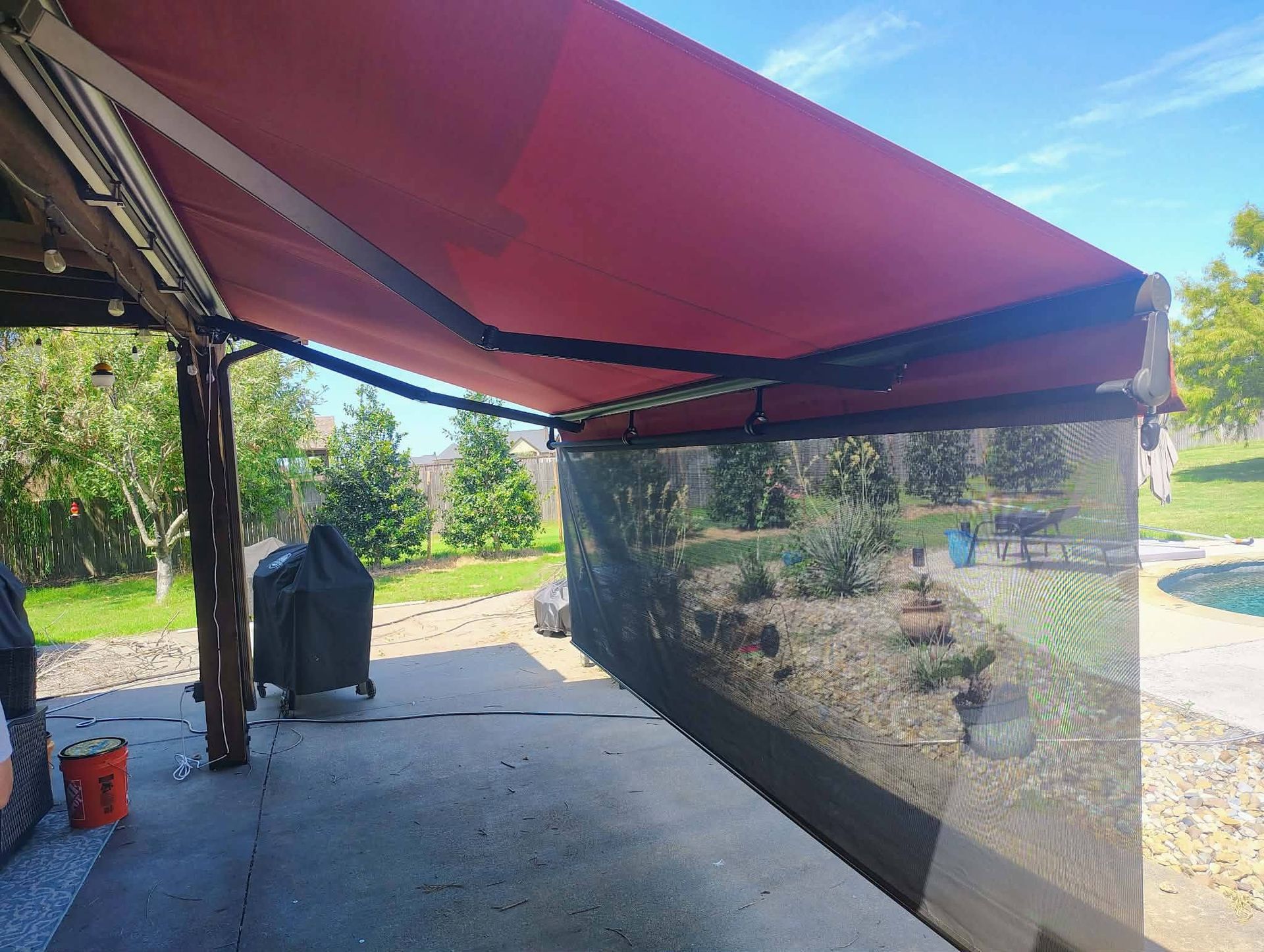
After installation, you'll notice that furniture positioned near treated windows no longer shows the progressive fading pattern that UV exposure causes over months of direct sun. Covered patios equipped with exterior roller shades become usable for more hours of the day because radiant heat from the sun is reflected outward rather than absorbed by the deck surface and surrounding walls. The Chimney Guy configures porch-mounted shades with track systems that hold fabric taut under wind load, preventing the billowing and premature wear that unguided exterior fabric develops.
Fabric selection affects both performance and aesthetics—lighter colors reflect more heat while darker colors provide better outward visibility in bright conditions, and the right choice depends on whether the priority is view preservation, heat rejection, or daytime privacy. Motorized systems add a layer of precision that manual chains can't replicate: automated schedules can lower shades during peak sun hours and raise them in the evening without manual input, which is particularly useful for rooms that aren't occupied consistently throughout the day.
Common Questions About Roller Shade Installation
The questions below address how roller shades are selected, installed, and configured for the window conditions and patio layouts common in Gun Barrel City homes.
What is the difference between interior and exterior roller shade installation, and how does it affect performance?
Exterior shades mount outside the window frame and block solar energy before it contacts the glass, reducing heat gain more effectively than interior shades at equivalent fabric densities; interior shades intercept light after it has already passed through the glass, which still reduces glare but less of the radiant heat.
How does openness factor affect what you see through a roller shade?
Lower openness percentages—1% to 3%—block more light and heat but preserve an outward view from inside the room; higher percentages let in more ambient light and are better suited to privacy screening rather than solar control.
What makes motorized roller shades worth installing over a chain-drive system?
Motorized systems are particularly useful for windows that are difficult to access manually, such as high transoms or multi-window runs, and they integrate with home automation platforms so shades can be scheduled to respond to time of day rather than requiring manual operation.
How are exterior roller shades secured so they hold position when wind is present?
Properly installed exterior shades use side guide tracks that the fabric edge runs through, keeping the shade tensioned and preventing it from lifting or billowing; this track system also protects the fabric edges from abrasion and extends the usable life of the material.
What happens to covered patio shades when they are not in use?
Exterior roller shades retract into a housing or cassette mounted above the opening, which protects the fabric from UV degradation and debris when the shade is rolled up; a quality cassette housing is a key indicator of an installation built for long-term durability rather than low upfront cost.
Contact The Chimney Guy to review your window orientations and patio layout and identify which roller shade configuration—interior, exterior, manual, or motorized—fits your specific situation.