Controlled Heat Without Managing Wood Supply
Gas Fireplaces & Gas Logs in Gun Barrel City for homeowners prioritizing convenient operation and minimal maintenance requirements
Gas fireplaces eliminate the tasks associated with wood-burning systems—no splitting and stacking firewood, no hauling ash from the firebox, no waiting for flames to build from kindling. You control ignition, flame height, and heat output with a wall switch, remote control, or thermostat integration, and combustion stops the moment you shut off the gas supply. The Chimney Guy Fireplace and Patio installs gas fireplaces and gas log systems throughout Tyler, Gun Barrel City and North East Texas, converting existing masonry fireplaces or adding new direct-vent units that require no traditional chimney. Homeowners choosing gas options gain instant ambiance and supplemental heating without the ongoing labor wood burning demands.
Gas log sets install inside existing wood-burning fireplaces, using your current chimney for venting while providing realistic log shapes and flame patterns fueled by natural gas or propane. Installation connects the log set to your gas line, positions ceramic logs for optimal flame presentation, and ensures the damper remains open or is locked in place to vent combustion byproducts safely.
Schedule a consultation to compare vented and vent-free configurations based on your home's venting options and heating priorities.
How Vented and Vent-Free Systems Differ Functionally
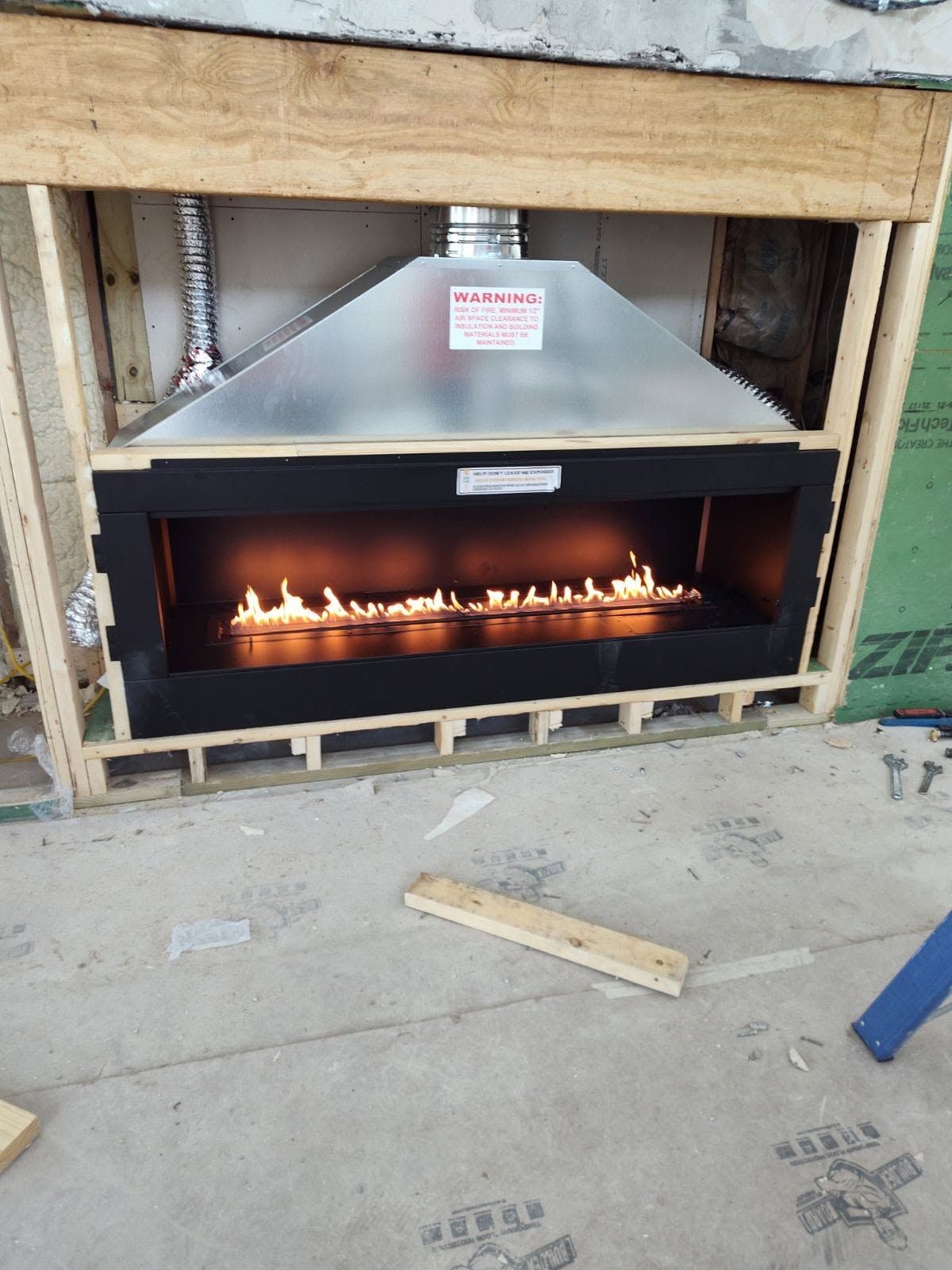
Vented gas fireplaces and log sets exhaust all combustion gases outside through either a traditional chimney or a direct-vent pipe that terminates through an exterior wall, maintaining indoor air quality by removing carbon dioxide and water vapor produced during burning. This venting process also pulls some heated air out of the room, reducing overall efficiency but ensuring complete isolation of combustion byproducts from living spaces. Vent-free systems burn gas so completely that manufacturers rate them safe for indoor use without external venting, retaining all generated heat inside the room but producing moisture and consuming oxygen that requires adequate room ventilation.
After installation, you notice that vented gas fireplaces produce taller, more dynamic flames resembling wood fires, while vent-free models generate shorter, steadier flames optimized for complete combustion. Both options ignite instantly and reach full heat output within minutes, eliminating the gradual warm-up period wood fires require. Remote controls allow you to adjust flame height and blower speed without leaving your seat, and thermostat-controlled models cycle on and off automatically to maintain your preferred room temperature.
Upgrades and replacements available for gas systems include switching from standing pilot lights that burn continuously to electronic ignition models that activate only when you turn the fireplace on, upgrading to larger burner systems for increased heat output, and installing decorative media options like fire glass or river stones instead of traditional ceramic logs. Professional installation ensures gas connections seal without leaks and venting meets manufacturer specifications for safe, efficient operation year after year.
Common Questions About This Service
Gas fireplace decisions involve understanding how venting methods, fuel sources, and efficiency ratings affect both installation costs and long-term operating expenses in North East Texas homes.
What makes direct-vent gas fireplaces suitable for homes without existing chimneys?
Direct-vent models use a sealed combustion chamber that draws outside air for burning and exhausts gases through a two-pipe system installed horizontally through an exterior wall. This design eliminates the need for vertical chimney construction and allows fireplace placement on any exterior wall, making installation feasible in rooms where traditional venting is unavailable.
How do gas log sets compare to full gas fireplace inserts for existing masonry fireplaces?
Gas log sets rest on the existing firebox floor and vent through your chimney, preserving the open fireplace appearance while adding convenient gas operation. Gas inserts completely fill the fireplace opening with a sealed unit, improving heating efficiency dramatically by preventing room air from escaping up the chimney, but they alter the traditional open-hearth look.
Why do some gas fireplaces produce realistic wood-fire appearances while others look artificial?
Flame realism depends on burner design, log placement, and whether the system uses vented or vent-free technology. Vented systems produce taller, more varied flames that flicker and dance like wood fires because they draw additional air through the combustion chamber, while vent-free burners create shorter, steadier flames optimized for complete fuel consumption and safety.
What maintenance do gas fireplaces require compared to wood-burning models?
Gas systems need annual inspections to clean burner ports, test ignition components, and verify proper venting, but they produce no ash or creosote requiring removal after each use. Maintenance focuses on ensuring gas connections remain leak-free and combustion efficiency stays within manufacturer specifications rather than managing byproduct accumulation.
When does it make sense to choose propane over natural gas for fireplace fuel?
Propane works for homes in Gun Barrel City and surrounding areas without natural gas service, delivered and stored in exterior tanks that supply your fireplace and potentially other appliances. Propane burns hotter than natural gas, producing slightly more heat per unit of fuel, but requires monitoring tank levels and scheduling refills.
The Chimney Guy Fireplace and Patio handles gas fireplace installation, servicing, and system upgrades with attention to proper venting and safe fuel delivery. Arrange an on-site evaluation to determine which gas fireplace configuration works best for your home's layout and utility access.