Radiant Heat From Managed Wood Fires
Wood-Burning Fireplaces & Inserts in Gun Barrel City for properties with existing masonry chimneys and homeowners committed to active fire management
Traditional wood-burning fireplaces require you to build, tend, and extinguish fires manually, managing airflow with dampers and adding split logs as flames consume fuel. This hands-on process produces radiant heat, the visual appeal of real wood combustion, and the characteristic scent of burning hardwood, but it also generates ash that requires removal and creosote that accumulates in chimney linings. Modern fireplace inserts installed inside existing masonry openings improve efficiency significantly by sealing the firebox, controlling combustion air precisely, and circulating heated air into the room with built-in blowers instead of allowing most heat to escape up the flue.
The Chimney Guy Fireplace and Patio services wood-burning fireplaces and installs inserts across Gun Barrel City and North East Texas, addressing common issues like smoke spillage, damper failures, and deteriorating mortar joints. Inspections evaluate chimney liner condition, firebox integrity, and venting performance to ensure safe operation and identify efficiency improvements available through insert installation.
Request an estimate to compare your current fireplace efficiency against the heating performance modern inserts provide.
What Proper Installation and Venting Require
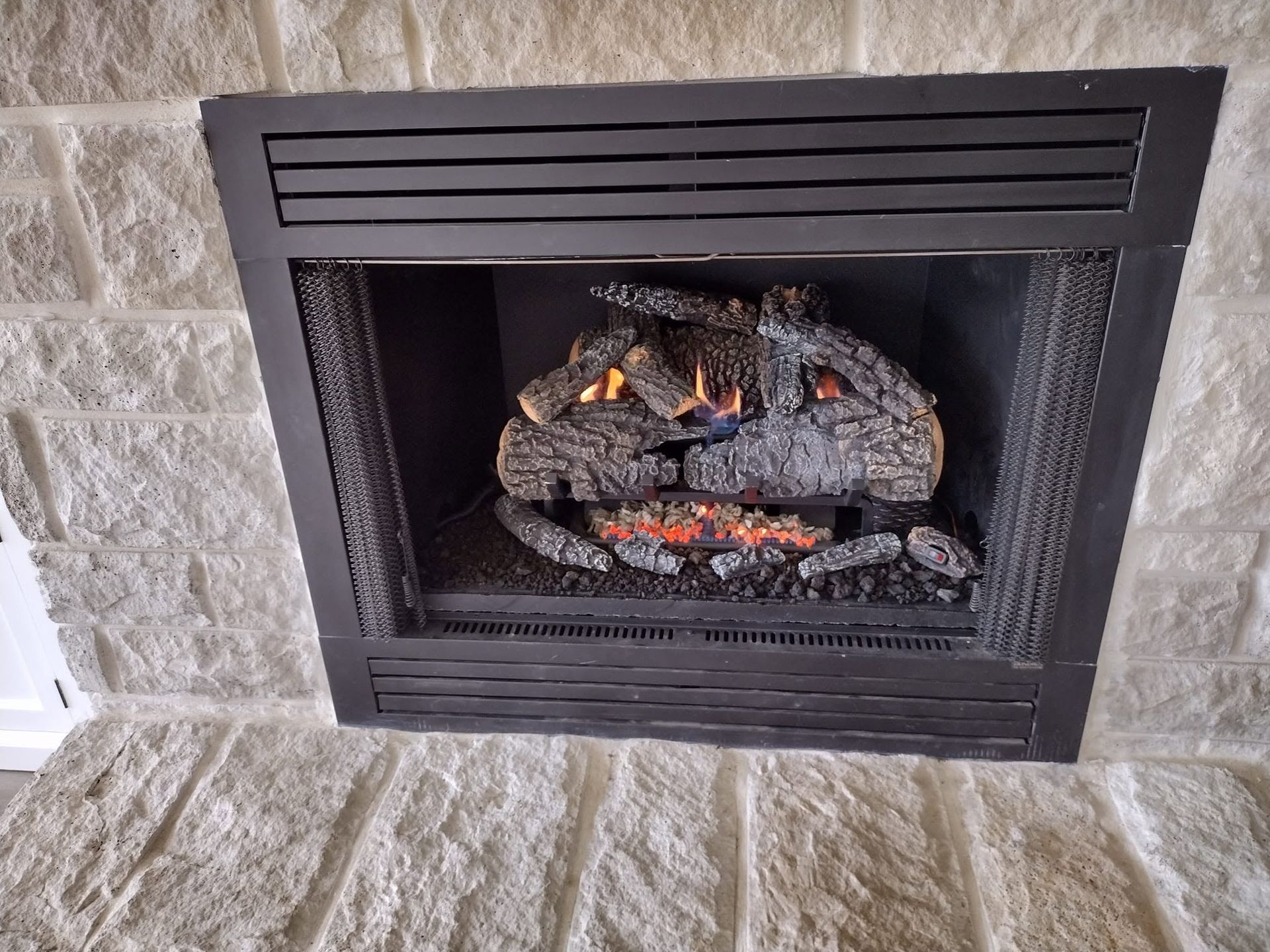
Installing wood-burning fireplace inserts begins with measuring the existing masonry opening to select an insert that fits without extensive modification, then preparing the firebox by repairing any cracked firebrick or damaged mortar that could allow heat to reach combustible framing. A stainless steel liner runs from the insert up through the existing chimney, creating a dedicated venting pathway that maintains proper draft and prevents creosote from contacting old, unlined masonry that may have deteriorated over decades of use. Insulation wraps the liner inside the chimney chase, improving draft efficiency and keeping exterior masonry temperatures within safe limits.
Once installation finishes, you notice fires burn more completely with less smoke because inserts control the amount of combustion air entering the firebox, maintaining optimal burning temperatures that consume wood efficiently. Glass doors seal the opening, preventing room air from flowing up the chimney when the fireplace is not in use, and blower fans distribute heat that would otherwise radiate only a few feet from the firebox. You empty ash pans periodically rather than shoveling ash from an open firebox, and the controlled combustion produces less creosote buildup compared to traditional open fireplaces.
Maintenance for wood-burning systems includes annual chimney inspections to measure creosote thickness and determine when professional sweeping is necessary, checking damper operation to ensure complete sealing when closed, and examining firebox refractory panels for cracks that develop from repeated heating cycles. Proper venting practices—burning only seasoned hardwood with moisture content below twenty percent and avoiding fires that smolder at low temperatures—reduce creosote formation and extend the time between required chimney cleanings.
What Property Owners Usually Ask
Wood-burning fireplace decisions involve understanding how inserts improve efficiency, what maintenance routines prevent chimney fires, and when repairs become necessary to maintain safe operation.
How do wood-burning inserts increase heating efficiency compared to open fireplaces?
Open masonry fireplaces radiate heat directly from burning logs but allow most heated air to rise up the chimney, often pulling more warm air out of the house than the fire generates. Inserts enclose the firebox with a sealed combustion chamber, heat exchanger tubes that warm air circulated by blowers, and insulated backs that reflect heat into the room instead of into the masonry, converting twenty-percent-efficient open fireplaces into systems delivering seventy percent or more of combustion heat to living spaces.
What causes smoke to enter the room instead of venting up the chimney?
Smoke spillage indicates inadequate draft, often caused by creosote buildup narrowing the flue, improperly sized chimney dimensions for the fireplace opening, or exterior air pressure conditions that overcome the chimney's natural updraft. The Chimney Guy Fireplace and Patio evaluates draft performance and recommends solutions ranging from chimney cleaning to cap replacement or liner installation that improves venting velocity.
How often do wood-burning fireplaces need chimney sweeping?
Sweeping frequency depends on how often you burn fires and what type of wood you use—burning seasoned hardwood three times weekly may require annual sweeping, while daily use or burning green wood necessitates inspection and cleaning twice yearly. Creosote accumulation accelerates when fires smolder at low temperatures or wood contains high moisture, creating conditions for chimney fires if buildup exceeds one-eighth inch thickness.
What makes seasoned hardwood preferable to other fuel sources for wood fireplaces?
Hardwoods like oak, hickory, and ash dried to below twenty-percent moisture content burn hotter and longer than softwoods or green wood, producing more heat per log and generating less creosote because complete combustion leaves minimal unburned particles. Wet or green wood smolders, creating excessive smoke and sticky creosote that adheres to chimney linings and requires frequent professional removal.
When should mortar joints in fireboxes be repaired rather than left alone?
Cracks in firebox mortar allow heat to reach surrounding combustible materials and compromise the structural integrity of the firebox itself. Tuckpointing deteriorated joints before damage extends to firebrick prevents costly rebuilds and maintains the thermal barrier protecting your home's framing from direct fire exposure.
The Chimney Guy Fireplace and Patio provides inspections, repairs, and insert installations that restore safe, efficient operation to wood-burning fireplaces throughout Gun Barrel City. Schedule a chimney evaluation to identify any venting issues or efficiency improvements suited to your current system.