Large-Area Coverage Without Structural Compromise
Shade Structure in Gun Barrel City for pools, playgrounds, and commercial patios requiring wide-span UV and wind-rated coverage
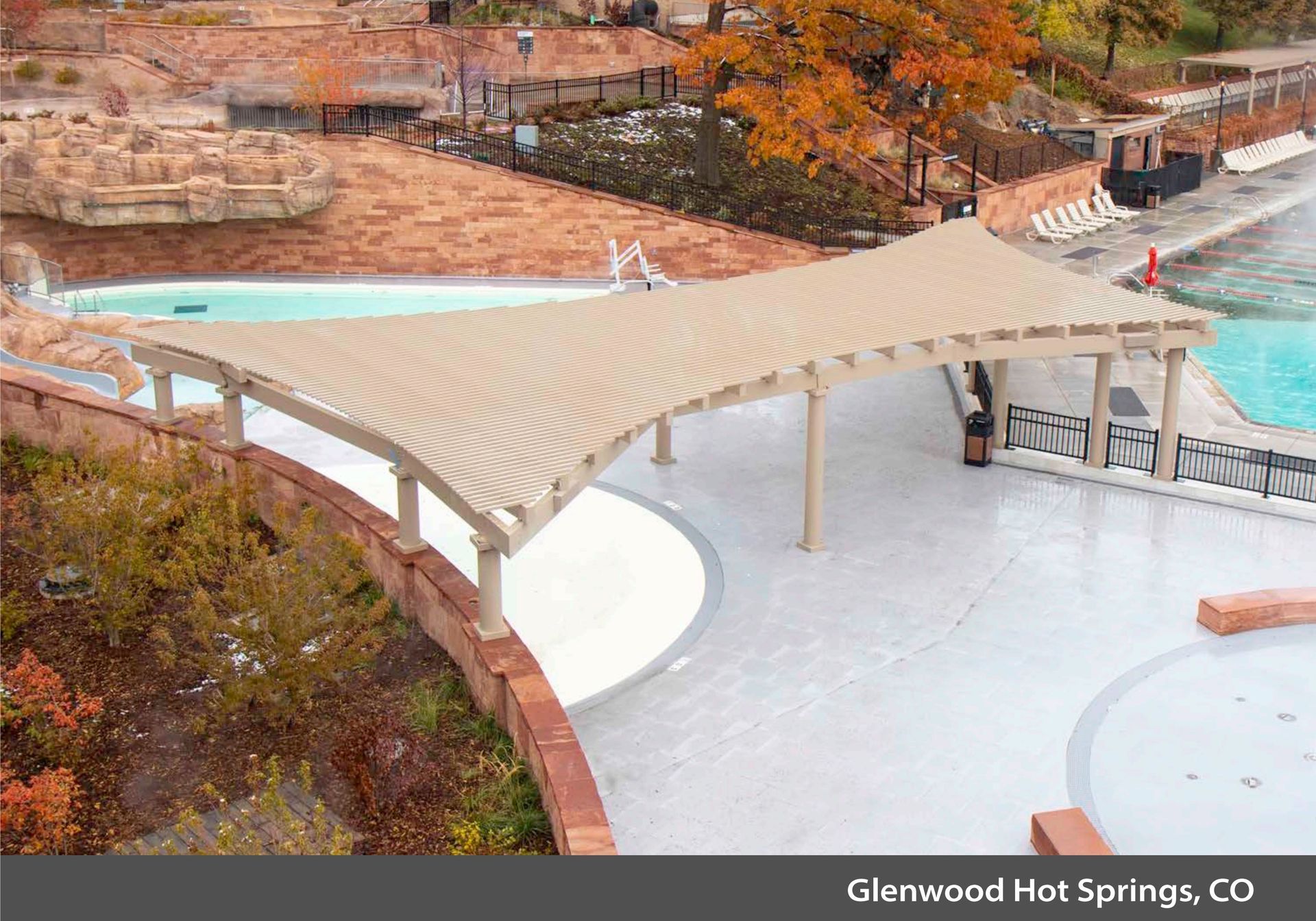
Properties in the Gun Barrel City area—ranging from lakefront residential lots with exposed pool decks to commercial recreation facilities and school campuses—share a common design challenge: covering large outdoor zones where standard residential pergolas or awnings fall short on both scale and load capacity. The Chimney Guy installs commercial-grade shade structures engineered for exactly these footprints, using heavy steel post frameworks, cable-tensioned sail configurations, and architectural canopy systems built to remain intact under high wind loads that would tear lighter residential shade products. These are not scaled-up backyard umbrellas; they are purpose-built systems designed to function without failure over extended periods of heavy use.
The fabric used in these installations is high-density polyethylene (HDPE) rated to block up to 95 percent of UV radiation while maintaining open-weave airflow so that covered areas stay cooler through passive ventilation rather than trapping heat underneath a solid membrane. The steel post foundations are set and anchored to accommodate the cable tension loads specific to each structure's geometry—a detail that varies significantly between a simple hip-roof canopy over a patio and a multi-point sail structure spanning a playground or sports viewing area. The Chimney Guy works through that engineering at the planning stage rather than adjusting in the field.
Contact The Chimney Guy to discuss your specific coverage footprint and confirm which structure type and post layout fits your property's dimensions and use pattern..
What Proper Commercial Shade Installation Requires
Sizing a shade structure correctly means accounting for the cable tension geometry before a single post is set. In a sail structure, the fabric is not simply draped—it is tensioned between fixed attachment points, and the angle and length of each cable segment determines how load distributes across the posts under wind. Getting that calculation wrong means the fabric either flutters loose or concentrates stress at a single anchor point, eventually pulling the post or tearing the attachment hardware from the fabric edge. The Chimney Guy specs each structure's post placement and footing depth based on the specific geometry of the coverage area and the wind-load requirements for the installation site.
Once a properly engineered shade structure is installed, the functional difference is noticeable at ground level: surface temperatures in the shaded zone drop measurably, the HDPE fabric moves with wind rather than resisting it rigidly, and the posts remain plumb without visible lean or movement at the base. For pool decks and playground surfaces, the UV blocking at the 95 percent rated level also means that hardscape and play equipment surfaces heat significantly less than they would under a lower-rated fabric or no shade at all.
Architectural canopy and hip-roof configurations follow a different structural logic than sail structures—the roof panel sits on a rigid perimeter frame rather than relying on cable tension, which makes them better suited to situations where consistent overhead coverage at a fixed angle is the priority. The Chimney Guy helps property owners identify which configuration addresses their actual coverage and maintenance requirements before committing to a post layout that would be difficult to modify later..
Answers About How the Work Is Done
The following questions address how commercial-grade shade structures are designed, installed, and evaluated for properties with large outdoor coverage needs.
How does cable tensioning in a sail structure differ from a rigid canopy frame?
A sail structure relies on pre-calculated cable tension to hold the fabric taut and distribute wind load between multiple anchor posts, while a rigid canopy frame uses welded or bolted perimeter steel to support the fabric without tensioning, making each system suited to different geometries and load patterns.
What makes HDPE fabric the standard material for commercial shade structures?
HDPE is manufactured with UV stabilizers woven into the fiber rather than applied as a surface coating, which means the UV-blocking performance does not degrade with washing or abrasion the way coated fabrics do over time.
How is post footing depth determined for a large shade structure installation in Gun Barrel City?
Footing depth depends on the post height, the cable tension loads or canopy weight, and the specific soil bearing capacity at the installation site—which on lakefront and mixed residential-commercial properties in this area can vary significantly even within the same lot.
What should be evaluated in the finished installation to confirm the structure is properly tensioned?
Properly tensioned sail fabric shows no visible flutter at low wind speeds, maintains a consistent curve between attachment points, and shows hardware at each corner that is under load without visible distortion of the attachment plate or fabric edge reinforcement.
When does a hip-roof canopy perform better than a sail configuration for large patio coverage?
A hip-roof canopy is a stronger choice when the coverage area is rectangular and continuous overhead blocking is more important than airflow, particularly over outdoor kitchen areas or permanent seating arrangements where sail geometry would leave gaps in the corners.
The Chimney Guy installs shade structures for residential pool decks, commercial patios, and institutional facilities across Gun Barrel City and can assess your site to determine the correct structure type, post configuration, and fabric specification for your coverage requirements. The Chimney Guy also installs shade structures in Mabank, Eustace, Kemp, and Athens.